
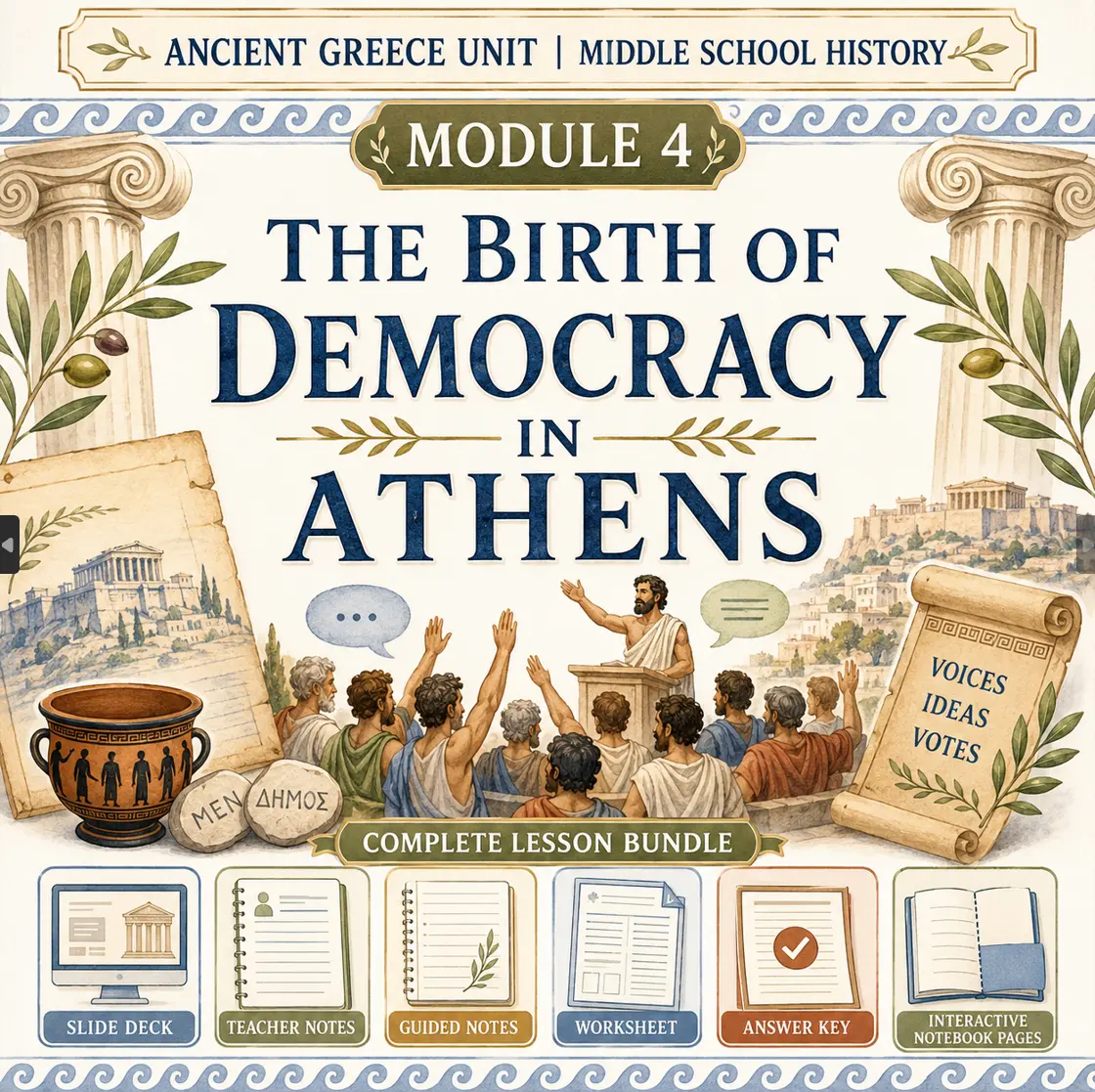
The Birth of Democracy in Athens Lesson Bundle | Ancient Greece Unit
5,5 $
This complete lesson bundle includes:
- Slide Deck for classroom instruction
- Teacher Notes with lesson guidance and slide-by-slide support
- Guided Notes for students to complete during the lesson
- Worksheet Packet with varied practice activities
- Answer Key for teacher reference
- Interactive Notebook Pages for hands-on review and notebook work
This bundle is designed to be no-prep, classroom-ready, printable, and easy to use.
The Birth of Democracy in Athens | Ancient Greece Unit | Middle School History Lesson Bundle
Bring Ancient Greece to life with this complete, no-prep lesson bundle on The Birth of Democracy in Athens. This resource helps middle school students understand how democracy developed in Athens, why reformers such as Draco, Solon, and Cleisthenes mattered, how Athenian citizens participated in government, and why Athenian democracy was both an important achievement and a limited system.
This lesson is designed for Grade 6 / Middle School History and works well as part of an Ancient Greece unit, a world history curriculum, a civics connection lesson, or a study of early democratic ideas.
Students will not simply memorize that Athens “invented democracy.” They will explore the deeper question:
Who should have a voice in government?
Through slides, guided notes, worksheets, interactive notebook pages, and review activities, students will investigate how Athens moved from rule by aristocrats and powerful families toward a system where some citizens could debate, vote, serve on juries, and participate directly in public decisions.
What’s Included
This complete lesson bundle includes:
- Slide Deck for classroom instruction
- Teacher Notes with lesson guidance and slide-by-slide support
- Guided Notes for students to complete during the lesson
- Worksheet Packet with varied practice activities
- Answer Key for teacher reference
- Interactive Notebook Pages for hands-on review and notebook work
This bundle is designed to be no-prep, classroom-ready, printable, and easy to use.
Lesson Topic
Ancient Greece Unit | Middle School History
Module 4
The Birth of Democracy in Athens
Students Will Learn About
Students will learn how democracy developed gradually in Athens and why it became one of Ancient Greece’s most important legacies.
Key lesson topics include:
- Athens before democracy
- Problems between rich and poor Athenians
- Debt, land ownership, and social tension
- Draco and written laws
- Solon’s reforms
- Peisistratus and tyranny
- Cleisthenes and democratic reform
- The meaning of democracy
- Direct democracy in Athens
- The Assembly
- The Council of 500
- Courts and citizen juries
- Who could participate in Athenian democracy
- Who was excluded from Athenian democracy
- Strengths and limits of Athenian democracy
- Connections between ancient and modern democratic ideas
Essential Question
How did Athens create a new way for citizens to take part in government?
Supporting questions include:
- Why did Athens need reform?
- How did Draco, Solon, and Cleisthenes help change Athens?
- What did democracy mean in Ancient Athens?
- Who counted as a citizen?
- Who was excluded from political rights?
- Was Athens truly democratic?
- Why does Athenian democracy still matter today?
What Makes This Lesson Strong
This lesson is built around historical thinking, discussion, and student engagement. Students are encouraged to think critically about both the achievements and limits of Athenian democracy.
Instead of presenting Athens as a perfect democracy, this lesson helps students understand a more balanced historical view:
Athenian democracy gave some citizens a powerful voice in government, but it did not include everyone.
That balance makes the lesson more meaningful, more accurate, and more discussion-friendly for middle school students.
Skills Practiced
This resource helps students practice:
- Vocabulary development
- Reading comprehension
- Timeline sequencing
- Cause and effect thinking
- Comparing forms of government
- Diagram labeling
- Sorting included and excluded groups
- Claim-evidence-reasoning writing
- Short answer response
- Class discussion
- Historical interpretation
- Exit ticket reflection
Worksheet Activities Include
The worksheet packet includes a variety of practice types to keep students engaged.
Activities include:
- Warm-up opinion question
- Vocabulary matching
- Student-friendly reading passage
- Reading check questions
- Timeline ordering activity
- Reformer chart
- Types of government comparison chart
- Scenario-based government identification
- Athenian democracy diagram
- Direct democracy vs. representative democracy comparison
- Included / excluded sorting activity
- Multiple choice review
- True or false correction
- Evidence-based thinking activity
- Class Assembly simulation
- Final exit ticket
This gives students multiple ways to understand the lesson content instead of only answering basic recall questions.
Interactive Notebook Pages Include
The interactive notebook component gives students hands-on review activities that can be cut, folded, sorted, glued, and completed in student notebooks.
INB pages include:
- Types of Government Foldable
Monarchy, oligarchy, tyranny, and democracy - Road to Democracy Timeline Foldable
Draco, Solon, Peisistratus, and Cleisthenes - Athenian Democracy Diagram Wheel
Citizens, Assembly, Council of 500, courts, and juries - Included or Excluded Sorting Flap
Who had political rights in Athens and who did not
These pages are ideal for review, notebook checks, early finishers, station work, or interactive history notebooks.
Guided Notes
The guided notes help students follow the lesson while listening to the teacher or viewing the slide deck.
Guided notes cover:
- Essential question
- Key vocabulary
- Athens before democracy
- Problems in Athens
- Road to democracy timeline
- Draco, Solon, and Cleisthenes
- How Athenian democracy worked
- Direct vs. representative democracy
- Who could participate
- Who was excluded
- Strengths and limits
- Final summary
The guided notes are designed with blanks, word banks, short prompts, and student-friendly structure so students can stay engaged without feeling overwhelmed.
Teacher Notes
The teacher notes are included to make the lesson easy to teach with minimal preparation.
Teacher notes may be used to support:
- Lesson pacing
- Classroom discussion
- Slide-by-slide instruction
- Background information
- Student engagement ideas
- Vocabulary explanation
- Review and exit ticket support
This makes the bundle useful for both experienced history teachers and teachers who need a ready-to-use Ancient Greece lesson.
Great For
This resource works well for:
- Middle school world history
- Grade 6 Ancient Civilizations
- Ancient Greece unit
- Introduction to democracy
- Civics connection lessons
- Sub plans
- Review days
- Interactive notebook activities
- Homeschool history
- Social studies enrichment
- No-prep classroom instruction
Key Vocabulary
Students will work with important vocabulary such as:
- democracy
- citizen
- Assembly
- Council
- reform
- oligarchy
- tyranny
- direct democracy
- representative democracy
- jury
- exclusion
- political rights
Why Teachers Will Like This Resource
Teachers will appreciate that this lesson is structured, complete, and easy to use. The materials are designed to work together so teachers can move from instruction to notes, worksheet practice, notebook activities, and assessment without needing to create extra materials.
The lesson gives students a clear understanding of Athenian democracy while also encouraging deeper discussion about fairness, citizenship, participation, and exclusion.
This is a strong lesson for helping students see that history is not only about dates and names. It is also about ideas, choices, power, and the question of who gets to participate.
Suggested Use
You can use this lesson in one or two class periods depending on your schedule.
Suggested pacing:
Day 1:
Slide deck instruction + guided notes + class discussion
Day 2:
Worksheet practice + interactive notebook activity + exit ticket
You can also use selected parts separately for review, centers, homework, substitute plans, or enrichment.
Perfect For Teachers Looking For
- Ancient Greece democracy lesson
- Athenian democracy worksheet
- Ancient Greece guided notes
- Middle school history lesson bundle
- Ancient Greece interactive notebook
- No-prep social studies lesson
- Grade 6 Ancient Civilizations resource
- Direct democracy lesson
- Athens government lesson
- Greek city-state government resource
Files / Materials Included
This bundle includes classroom-ready materials for teaching The Birth of Democracy in Athens:
- Slide Deck
- Teacher Notes
- Guided Notes
- Worksheet Packet
- Answer Key
- Interactive Notebook Pages
Everything is designed to help students understand how democracy developed in Athens, how citizens participated, and why Athenian democracy remains historically important despite its limits.
Teacher Note
This lesson is designed to present Athenian democracy in a balanced and age-appropriate way. Students learn that Athens made an important contribution to world history by developing direct citizen participation, but they also learn that many people living in Athens were excluded from political rights.
This makes the lesson ideal for thoughtful classroom discussion and historical thinking.
Related products

Middle School History
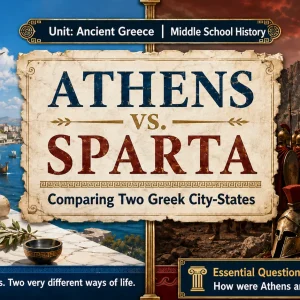
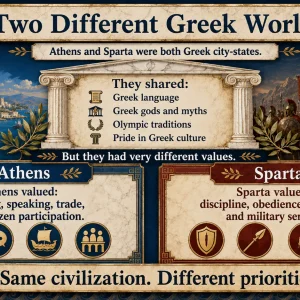
Athens vs. Sparta Lesson Slide Deck – Ancient Greece Unit | Middle School History


Middle School History
Athens vs. Sparta Lesson Bundle | Ancient Greece Unit | Middle School History