
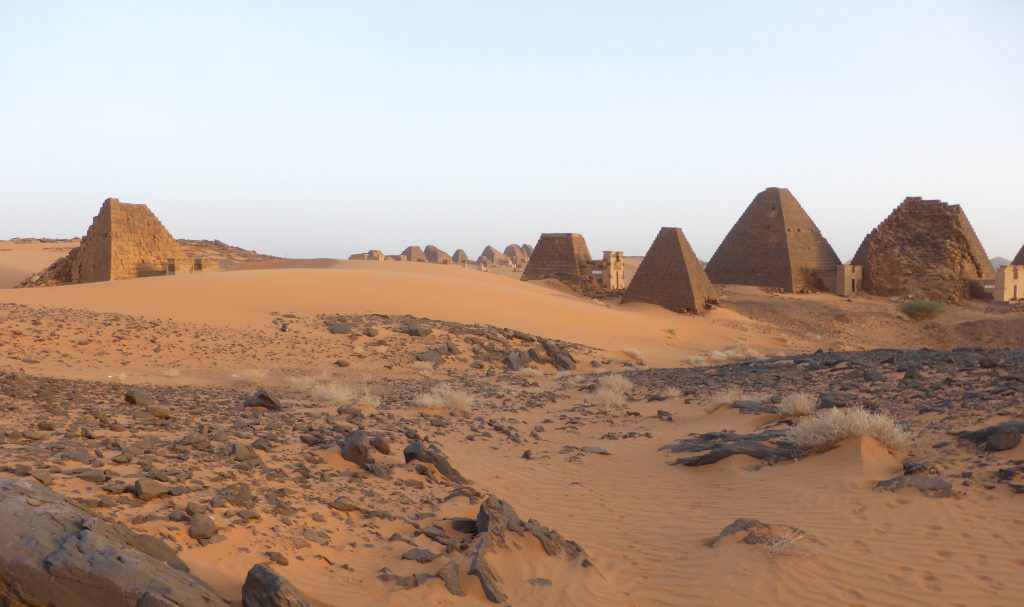
The steep-sided pyramids at Meroe invite an obvious comparison with Egypt. Follow that comparison too far, however, and an entire African history slips out of view. The kingdoms associated with Kush developed cities, trading connections, religious institutions and artistic traditions along the Middle Nile, in what is now Sudan. Their rulers sometimes fought Egypt, sometimes traded with it, and eventually governed it. Looking south from the Mediterranean tells only part of the story. Looking outward from Kerma, Napata and Meroe reveals societies with ambitions and connections of their own.
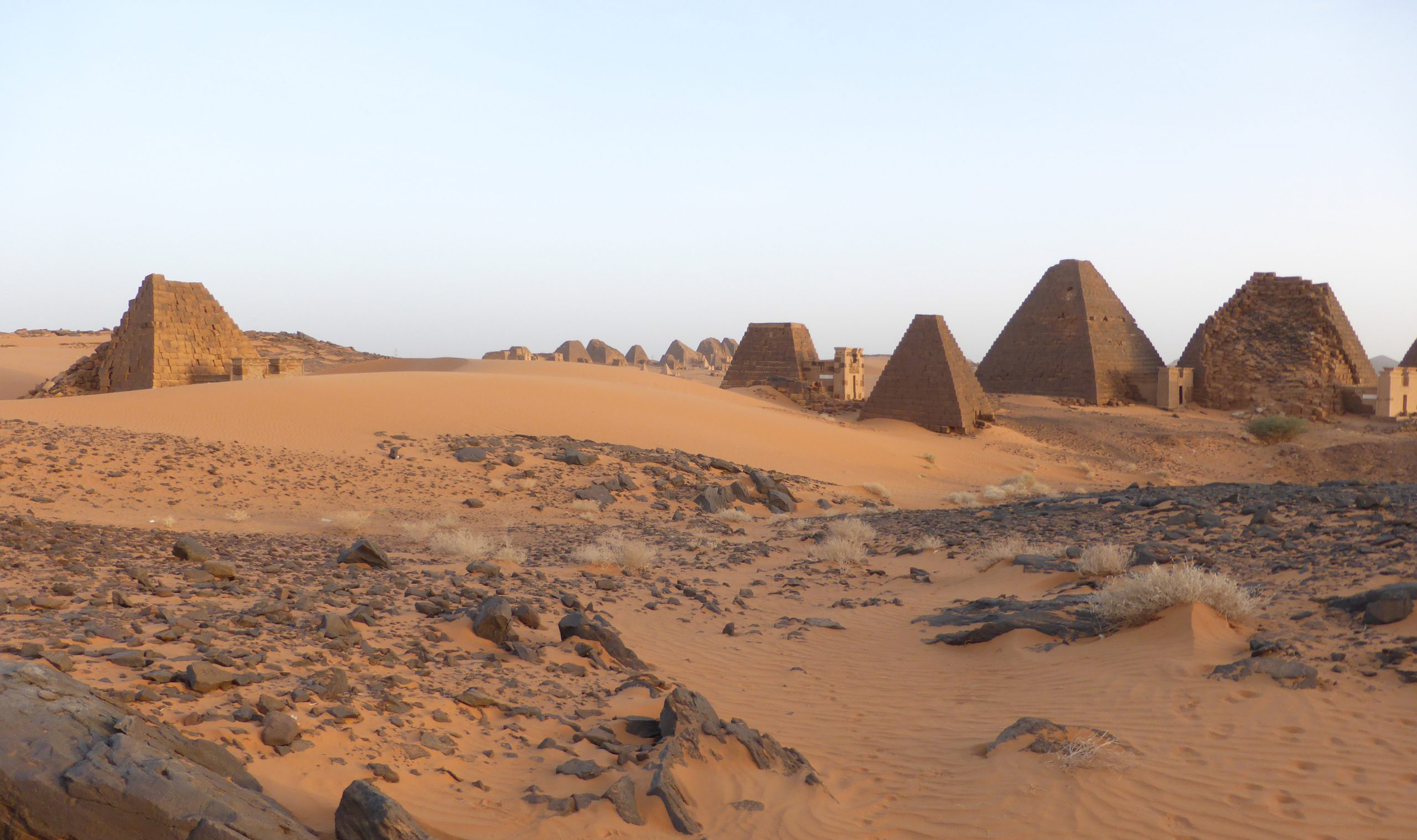
A river connecting several worlds
Nubia is a geographical and cultural name covering a long stretch of the Nile south of Egypt. Kush refers to states within that wider region. Neither term describes one unchanging population or a territory with permanent borders. The landscape included river valleys, deserts and routes reaching towards the Red Sea and the African interior.
The Nile made communication possible, but its cataracts, stretches broken by rocks and rapids, also complicated travel. Control of river passages and overland routes could therefore bring considerable influence. Gold from the surrounding deserts and goods such as ivory linked Nubia to distant consumers. As the Metropolitan Museum explains in The Land of Nubia, this position helped shape a long, changing relationship with Egypt.
Trade also involved choices made locally: what to produce, which routes to use and how to negotiate with neighbours. A useful map of Kush should show connections running in several directions, rather than ending at Egypt’s southern frontier.
Kerma: an early kingdom with its own ambitions
By about 2400 BCE, Kerma was an established, fortified settlement south of the Third Cataract. Over the following centuries it became the centre of a powerful kingdom. Its massive mud-brick religious buildings, royal burials and specialised workshops reveal a society capable of organising substantial labour and wealth. According to the Museum of Fine Arts, Boston, its trade network reached towards central Africa and the Red Sea coast.
Egyptian objects discovered at Kerma once encouraged the mistaken conclusion that Egyptians must have controlled the city. The presence of foreign goods cannot establish who held political power: objects might arrive through exchange, diplomatic gifts or warfare. Kerma’s own architecture and material culture are essential evidence.
During periods of Egyptian weakness, Kerma expanded northwards. Its rulers occupied Egyptian forts and established relations with the Hyksos rulers in the Nile Delta. Egypt’s New Kingdom expansion eventually ended Kerma’s independence in the mid-second millennium BCE. That conquest interrupted the history of local state power; it should not be smoothed into a story of one uninterrupted Kushite dynasty. The Met’s chronology of second-millennium Sudan traces these changing relationships.
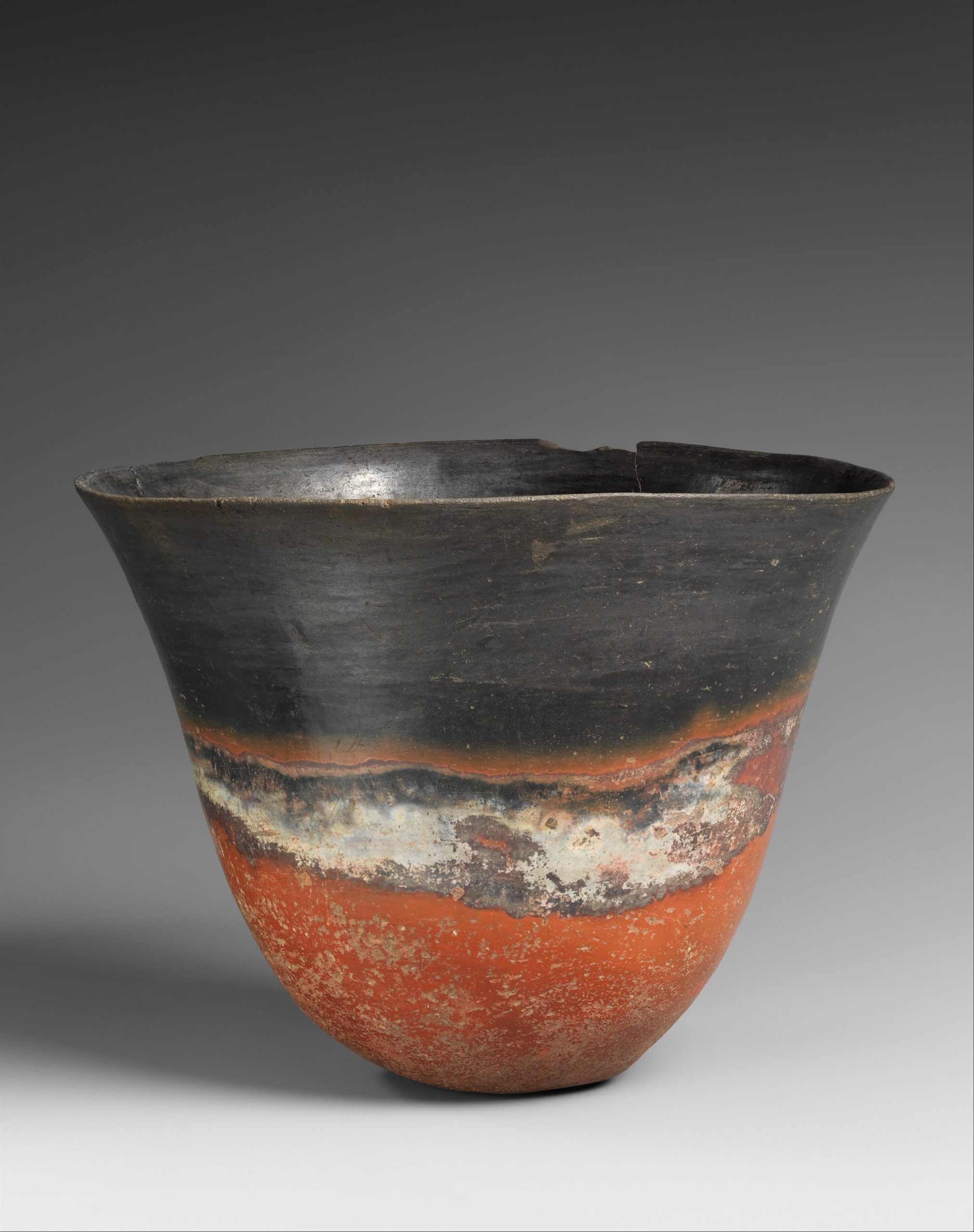
A small beaker gives this history a tangible scale. Kerma potters made remarkably thin-walled vessels with polished red bodies and black upper surfaces. Producing those colours required controlled firing. The example pictured here was found at Abydos, well inside Egypt. The museum’s object record suggests that some burials containing Kerma pottery might belong to traders from Nubia, while acknowledging that their owners’ identities remain uncertain. The vessel demonstrates contact without allowing us to invent its owner’s biography.
Napata: sacred authority and imperial power
After Egyptian control weakened, a new Kushite kingdom emerged during the early first millennium BCE. The Napatan region, near the sacred mountain of Gebel Barkal, became a major focus of royal authority. The worship of Amun, established there during Egyptian rule, acquired a central place in Kushite kingship. Temples, palaces and royal cemeteries made the region a landscape of political memory as well as religious devotion. UNESCO’s account of the Napatan sites documents this combination.
In the late eighth century BCE, Kushite kings extended their power into Egypt. Piye’s campaigns and the rule of his successors created the Twenty-Fifth Dynasty. Rulers such as Taharqa participated fully in Egyptian religious and royal traditions while maintaining their southern homeland.
Borrowing a powerful religious language could be a deliberate political act. Kushite kings presented themselves as legitimate protectors of an established sacred order. When Assyrian campaigns ended their rule in Egypt during the seventh century BCE, Kush continued as an independent kingdom farther south.
Why the centres of power changed
The familiar sequence “Kerma, Napata, Meroe” is useful, but it can make political change sound too tidy. A royal residence, a ceremonial centre and a burial ground do not have to occupy the same place. Their importance can change at different speeds.
Meroe was already significant before it became the kingdom’s principal centre. From the third century BCE, most royal burials took place there, while the Napatan region retained its sacred importance. This is why assigning a single, undisputed year to “the move of the capital” is misleading. UNESCO’s Meroe description distinguishes the rulers’ principal residence from the later concentration of royal burials.
The southern centre also belonged to a different network of opportunities. Caravan connections linked it with routes towards the White and Blue Nile regions. Its growing importance widened the geographical frame of Kushite history.
Meroe: workshops, water and a written language
Meroe’s surviving pyramids are only one part of its archaeological landscape. The royal city, religious centres at Naqa and Musawwarat es-Sufra, industrial remains and water-management installations show how settlement and authority extended beyond a narrow strip beside the river. Storing water was fundamental to activity in the hinterland.
Craft production included decorated pottery, textiles, jewellery and metal objects. Imported glass, metal vessels and wine demonstrate connections with Egypt and the Mediterranean world. The Met’s account of the Napatan and Meroitic periods describes a society that produced desirable goods as well as acquiring them.
Meroitic writing offers another reminder of local cultural initiative. Scribes used both a monumental form and a more flowing everyday script. Researchers can identify the sound values of its signs, but understanding a script is different from translating a language: much Meroitic vocabulary and many texts remain difficult to interpret. UCL’s introduction to Meroitic writing explains this important distinction.
That difficulty shapes political history too. The Hamadab stela names Queen Amanirenas and Akinidad. Scholars have associated it with Kush’s conflict with Rome in the late first century BCE, but its full meaning remains uncertain. Kushite evidence deserves attention alongside the better-known Roman narrative.
Ironworking without an easy collapse story
Meroe’s slag heaps, the waste left by metal production, reveal substantial ironworking. They do not, by themselves, prove that iron was the kingdom’s principal export or that fuel consumption destroyed its environment. The scale, organisation and consequences of production require archaeological investigation.
A 2019 study by Jane Humphris and Barbara Eichhorn examined charcoal from ironworking contexts across more than a thousand years. It found a striking preference for Nile acacia. Assuming the fuel was obtained locally, the charcoal evidence did not support the familiar explanation of wholesale environmental degradation. Possible explanations include woodland management, different estimates of production or imported fuel; these remain questions to investigate.
The Meroitic kingdom ended around the fourth century CE, but its demise remains debated. Reducing that process to “the furnaces consumed every tree” gives a memorable answer at the expense of the evidence. The scholarly discussion of Meroe’s place among African states underlines how much remains to be explained.
Putting Kush back at the centre
Kerma, Napata and Meroe show different ways of organising power along the Middle Nile. Their histories include conquest and foreign influence, but also local craftsmanship, religious choices, trade and adaptation. Egypt belongs in that history, alongside other African regions and the Mediterranean. Beginning with Kush’s own cities and evidence changes the questions we ask, and gives its people a fuller place in the ancient world.

