
Monthly Archives: October 2026
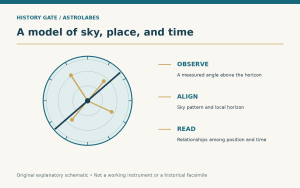
How an Astrolabe Turned the Sky into a Working Model
A movable star map, a latitude plate, and a measured angle made the astrolabe a
Oct
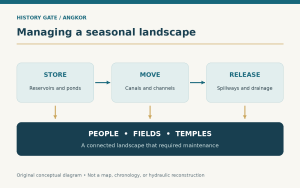
Angkor’s Water Network: A City Built Around Moving Water
Beyond Angkor’s temple towers lay a vast network of reservoirs, ponds and channels. Archaeology reveals
Oct
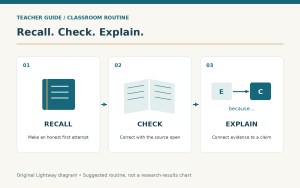
Retrieval Practice in History: Recall First, Reopen the Evidence Next
A twelve-minute history routine that separates recall, correction, and evidence-based explanation, with practical prompts and
Oct
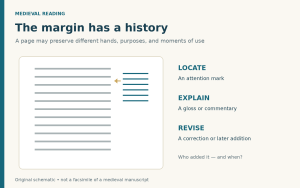
Why Medieval Readers Wrote in the Margins
Medieval margins could locate, explain, correct, and help readers remember a text. Their marks also
Oct
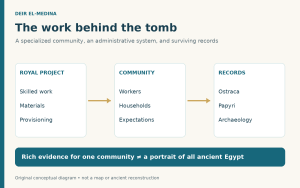
Deir el-Medina: The Records Behind Egypt’s Royal Tombs
Explore the records of Egypt’s royal tomb workers, from limestone writing surfaces to the Strike
Oct
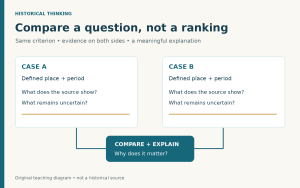
Teaching Historical Comparisons Without Ranking Civilizations
A practical forty-minute routine for comparing two historical cases through matched criteria, evidence, and explanation—not
Oct
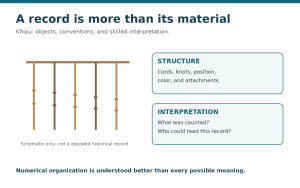
How the Inka Made Records with Knots
Explore Inka khipu as a sophisticated record-keeping practice, while separating numerical knowledge from meanings that
Oct
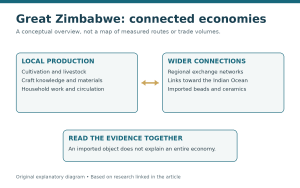
Great Zimbabwe Was Built on More Than Trade
Great Zimbabwe’s imported objects tell only part of its story. Household production, local knowledge, and
Oct
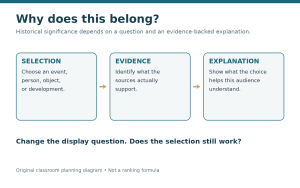
Teaching Historical Significance: Make the Selection Explain Itself
An evidence-led classroom routine for selecting historical examples, explaining significance, and revising choices when the
Oct
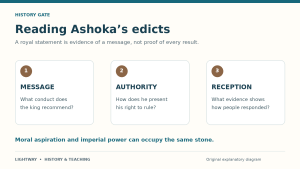
What Ashoka’s Edicts Ask of Readers
Ashoka’s inscriptions place moral aspiration beside imperial power. A careful reading separates the ruler’s message
Oct