
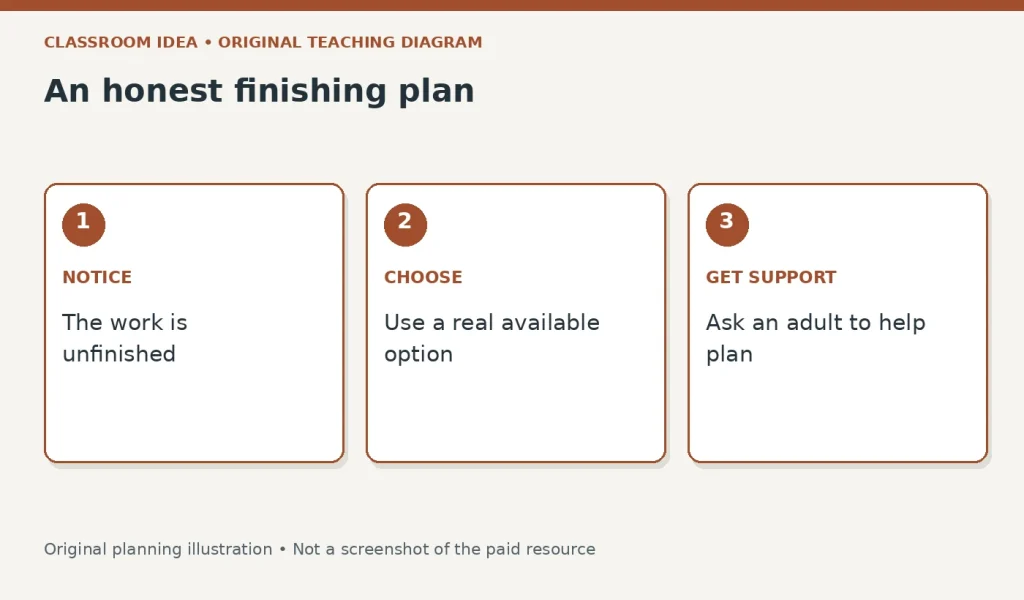
“Clean up” sounds like one instruction to an adult. To a child, it can contain several unanswered questions: Which materials? Where do they belong? Can the unfinished picture be saved? What happens when the next step is hard? Repeating the same broad command more loudly does not answer those questions.
A useful centers-and-cleanup routine makes one next step visible, rehearses it with support, and checks whether the room actually allows children to carry it out. The goal is participation in shared care of the space. It is not a speed contest, a test of obedience, or a reason to withhold help.
Begin with the room, not the reminder slide
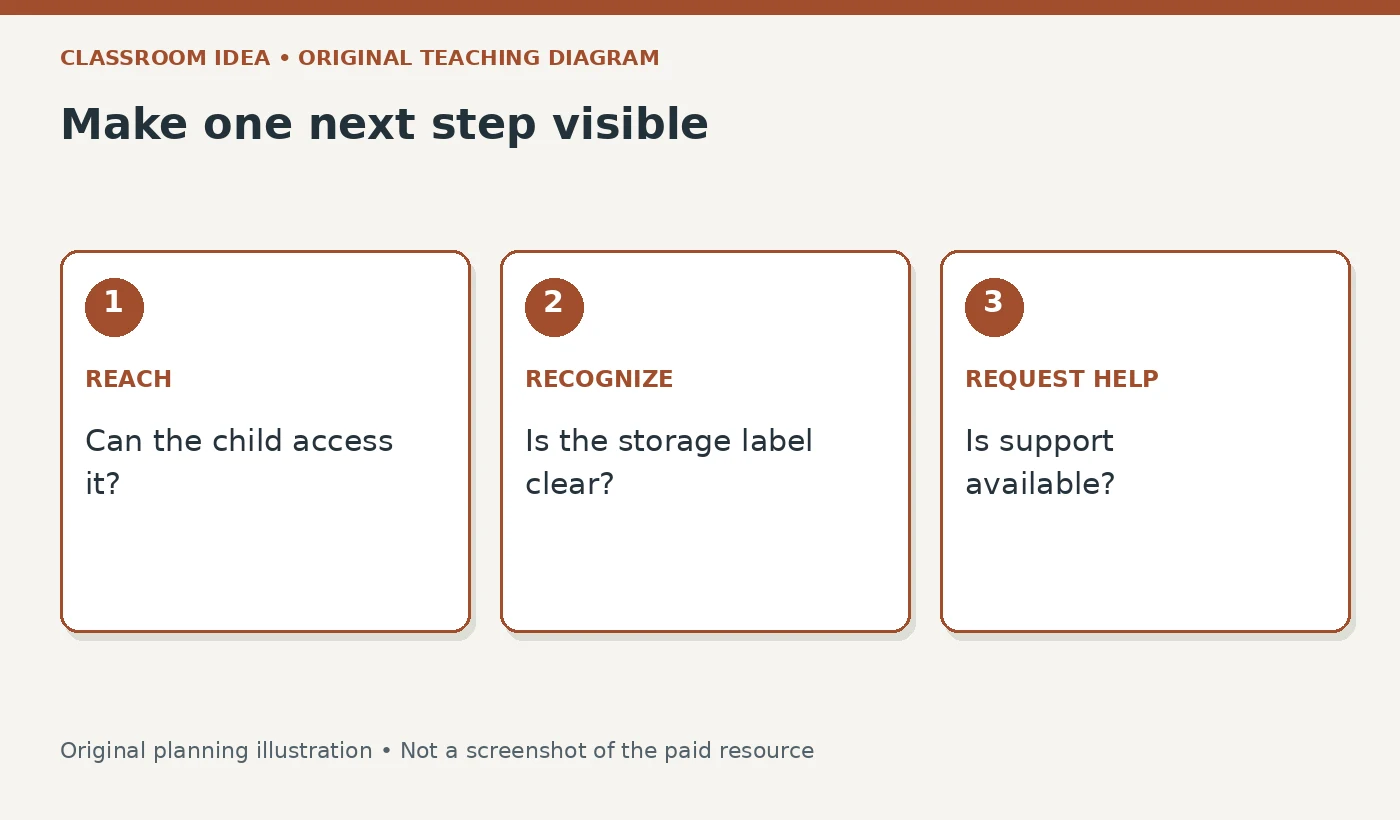
Before teaching the routine, walk through it from the child’s position. Are the containers reachable? Is the label clear? Is the route wide enough for the people and mobility tools using it? Does a child have to carry more than is manageable? A picture of an ideal storage shelf cannot solve a real shelf that is inaccessible.
Choose one center for the first rehearsal. Place only a manageable selection of materials there and agree with other adults on the actual finishing cue, storage locations, and available help. The Head Start Schedules and Routines materials offer background on making daily routines understandable. The classroom sequence here is an original planning example, not a prescribed Head Start program or a tested behavior intervention.
Teach a finishing plan before cleanup starts
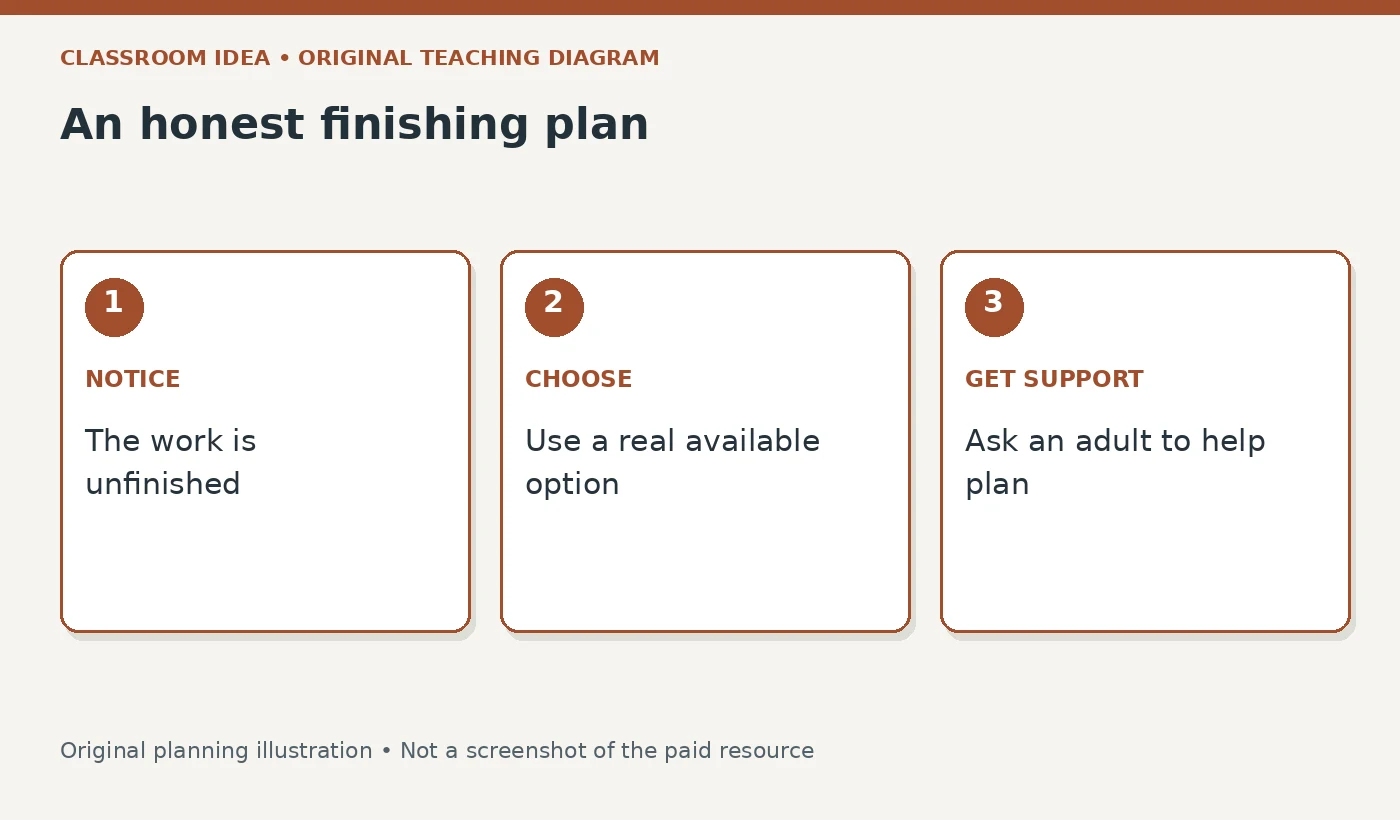
Children may be building, drawing, or solving a problem when a center ends. A finishing plan explains what can happen to work that is not complete. For example, the class might have an agreed place for a paper drawing that can genuinely be resumed later. Do not promise that every large construction can remain in a busy room if that is not possible.
Use a fictional example rather than singling out a child who struggled yesterday. “This drawing is not finished. Which plan is available in our room?” Demonstrate the actual choices, including adult help deciding. If no save option is possible, say so kindly and offer a truthful alternative. A photograph should only be taken under the school’s approved arrangements; photographing children or their work is not required for this routine.
Model one small sequence
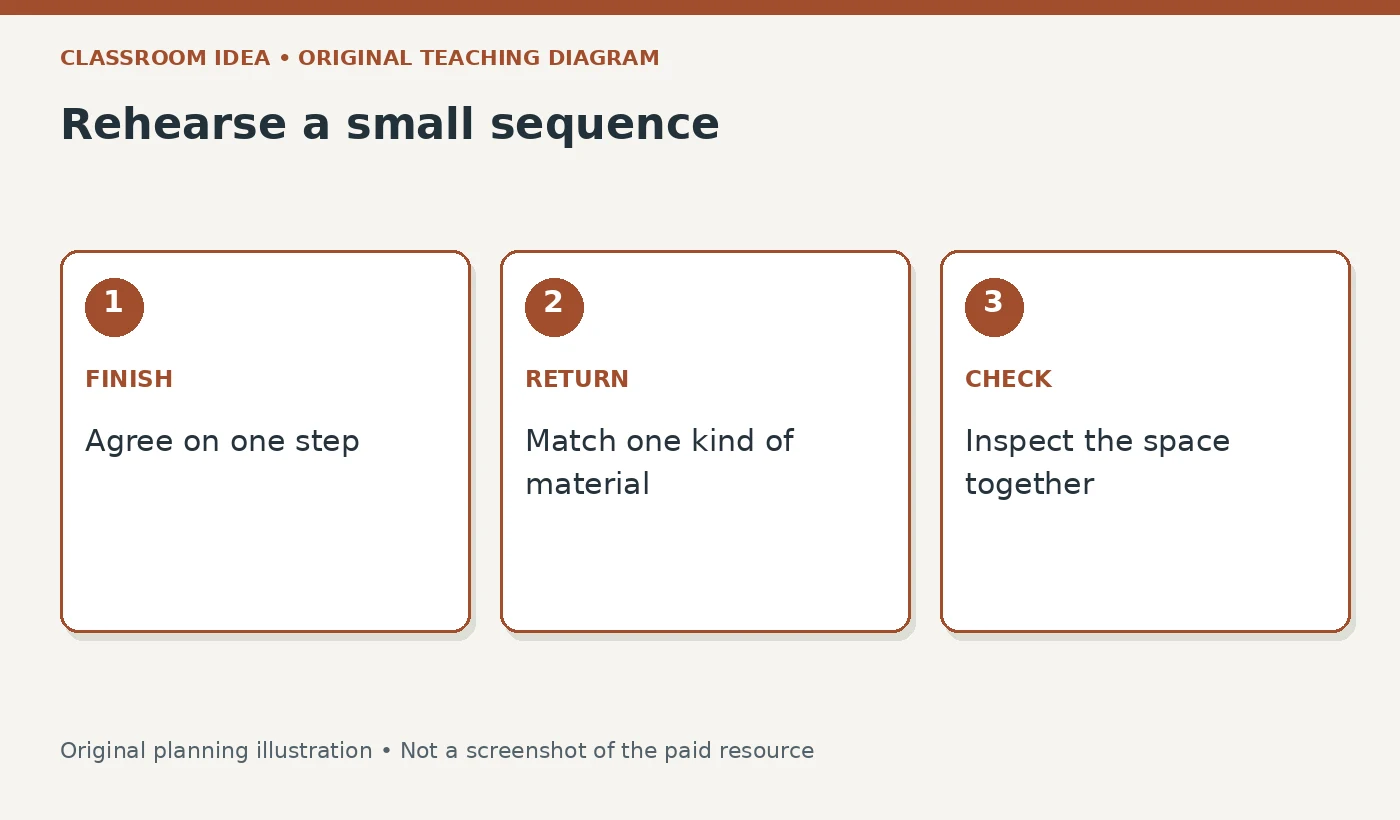
- Notice the cue. Show and explain the class’s real cue in an accessible way. Do not assume everyone hears or processes the same signal.
- Choose a finishing step. Put a drawing in the agreed save place, finish one safe action, or ask an adult to help with the plan.
- Return one kind of material. Model matching blocks with the block container, rather than sweeping mixed items into the nearest bin.
- Check together. Look for a clear workspace and safe route, then identify the next destination or activity.
Demonstrate slowly and name what you are doing. Then invite learners to try one part with you. Observation, a supported attempt, or a pass can all be appropriate at the introduction. A child who cannot yet carry a box may point to its storage place while an adult moves it; that can still contribute to the shared task.
Rehearse when the room is calm
Do not make the first explanation compete with the busiest end-of-session moment. Set out a few practice materials and rehearse the route while there is time to pause. Ask “What would help you know where this goes?” rather than asking a whole group whether everyone understands.
Try a short partner activity: one learner selects an object, and the other points to its home using a label or the real container. They can swap roles, participate with adult support, or work individually. Use ordinary objects that are safe and easy to handle. Adults should manage sharp tools, heavy containers, spills, and broken items. Children should report a hazard and keep a safe distance rather than attempt a cleanup they have not been trained to perform.
Keep communication and care available
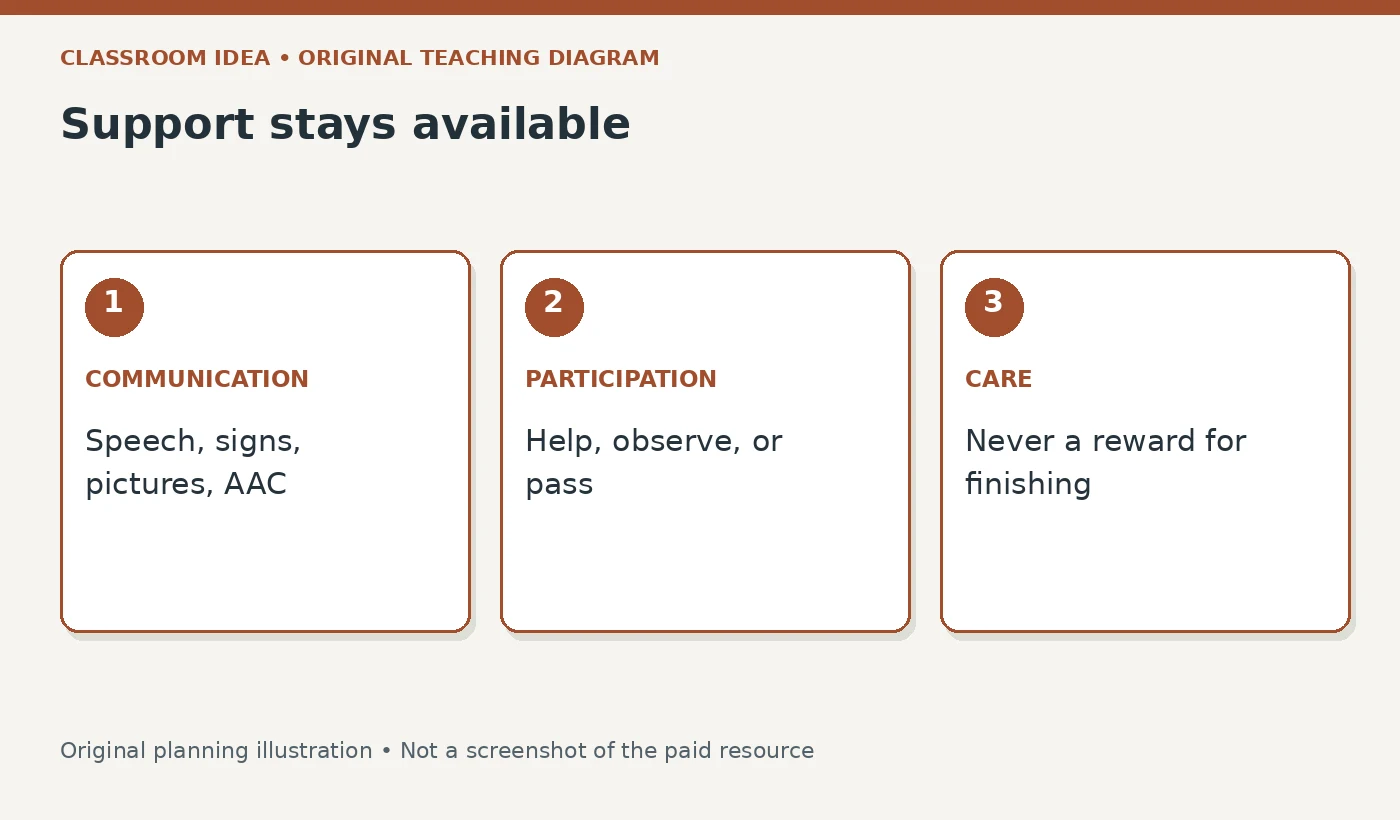
Some children will ask for help aloud; others may use a home language, gesture, sign, picture, or established AAC. Teach a way to request support that fits the learner instead of requiring one exact spoken sentence. Communication and mobility tools stay available during the routine. Help, water, bathroom access, and basic care are not rewards earned by finishing cleanup.
When a child appears stuck, first check the instruction and environment. The child may not know which items belong together, may be concerned about unfinished work, or may need a smaller physical step. These are possibilities to investigate, not diagnoses inferred from a behavior. Offer a concrete option: “Would pointing to the right box help, or shall we carry these together?”
Three fictional situations to discuss
The mixed basket: Blocks and crayons have been put together. Ask children what they notice and which one small sorting step would help. The unfinished tower: The agreed storage place cannot hold it. Discuss the real choices your room can offer rather than inventing a promise to save it. The wet floor: A cup has spilled on the route. Ask what the child should do and which adult action is needed.
Possible responses and teaching cautions
Mixed basket: Sort one type at a time into the labeled containers, with help if needed. Unfinished tower: An adult helps make an honest finishing plan consistent with the room’s space and schedule; there is no single universal answer. Wet floor: Tell an adult and stay safely back while the adult manages the hazard. Do not ask children to practice unsafe carrying or slippery-floor cleanup to demonstrate responsibility.
Observe the routine, then adjust one feature
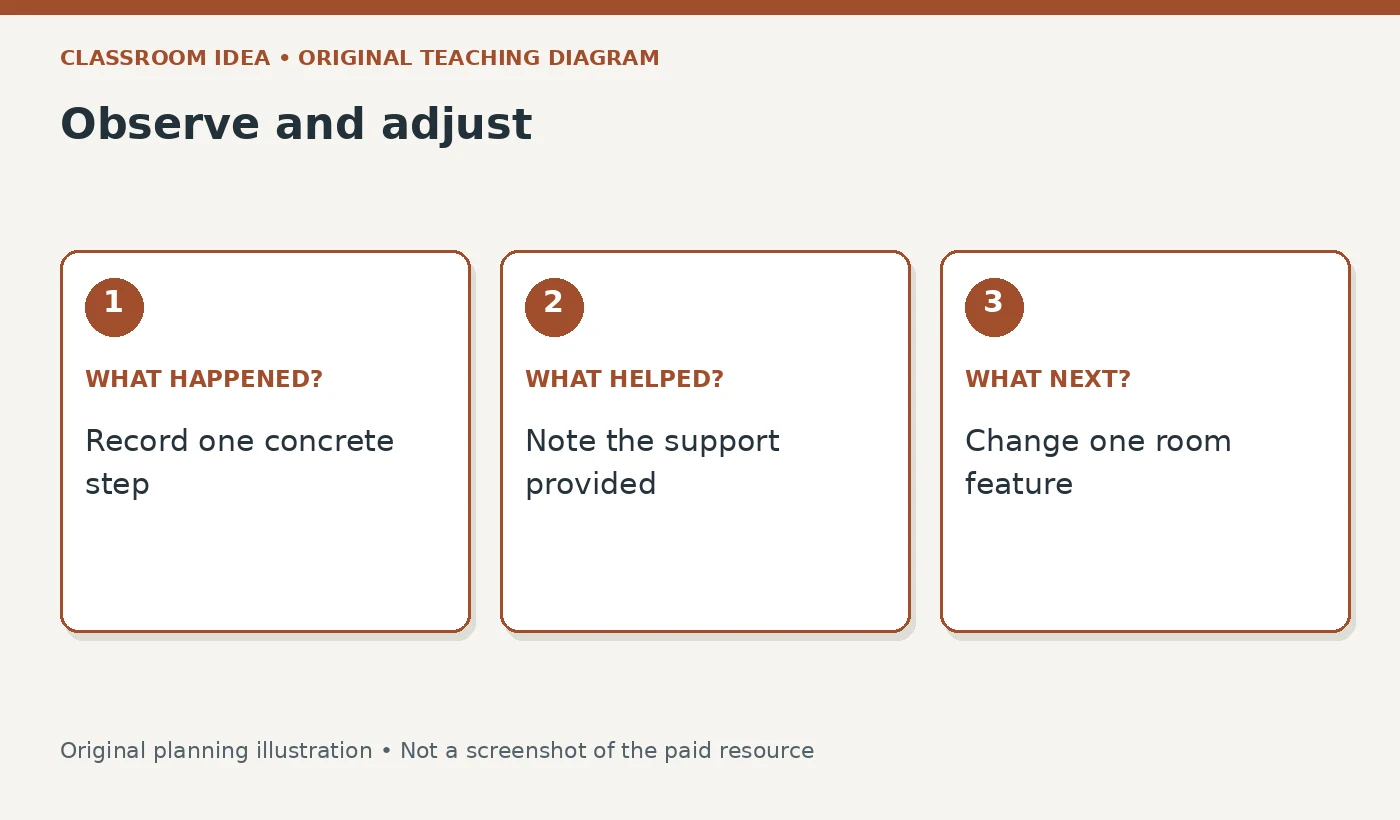
Use a private teacher note with three questions: what step was attempted, what support was available, and what change might make tomorrow easier? Record something concrete such as “matched the blocks with the picture label after a point cue.” Avoid public rankings or charts that turn needing assistance into a failure.
If several children stop at the same point, inspect that point in the routine. Perhaps the label is hidden when the lid is open, the next destination is unclear, or the save tray has no room. Change one feature and watch again. Rehearsal after a break can be brief and welcoming; familiarity is a reason to refresh the routine, not evidence that children should never need another explanation.
Using visual resources accurately
The Centers and Cleanup pack contains eight teaching slides paired with eight reminders, 12 cards across six pages, an editable Word Teacher Guide, and an Answers and Teaching Notes PDF. Its fictional classroom uses blocks, art, books, picture-labeled storage, and an optional paper save tray. Check those details against your room. Native notes are editable; changing notes does not change the fixed illustrations.
For moving between activities more broadly, see the four-step transition routine. Keep this cleanup lesson focused on materials, unfinished work, and checking the shared space, then connect it to the next transition the children actually use.
