
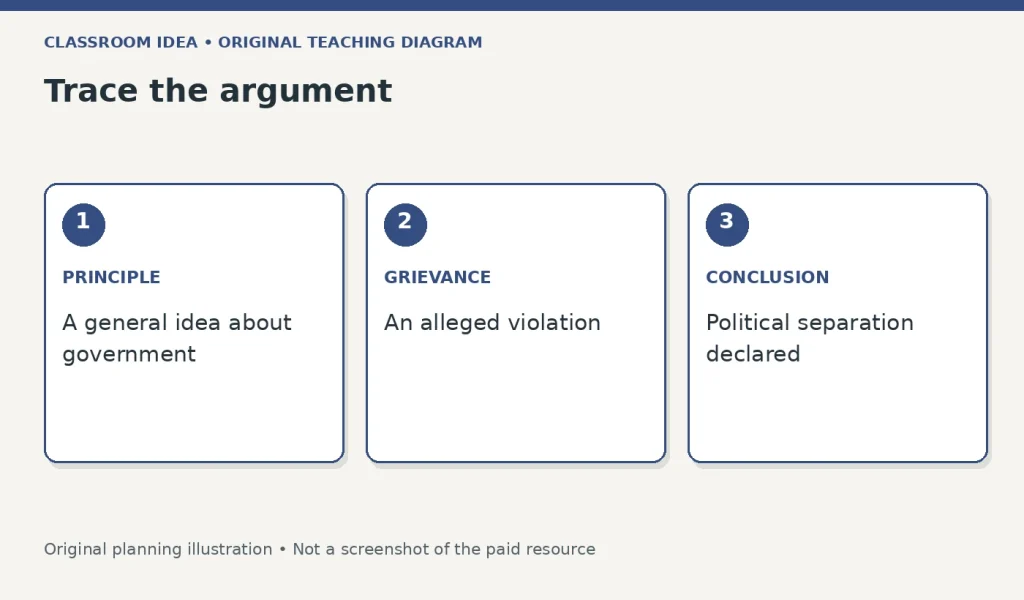
Students can recognize a famous sentence from the Declaration of Independence and still miss the document’s argument. A useful next step is to connect a general principle with a particular grievance and then with the political conclusion Congress announced. The task is not simply to sort vocabulary; it is to explain why one part of a persuasive document is there.
This lesson uses a small selection from the adopted text rather than trying to cover every grievance in one sitting. Students identify who is making the argument, distinguish a claim from independent corroboration, and explain a connection in their own words. Keep the source open throughout so that memory of a familiar phrase does not replace reading.
Put three dates in the right order
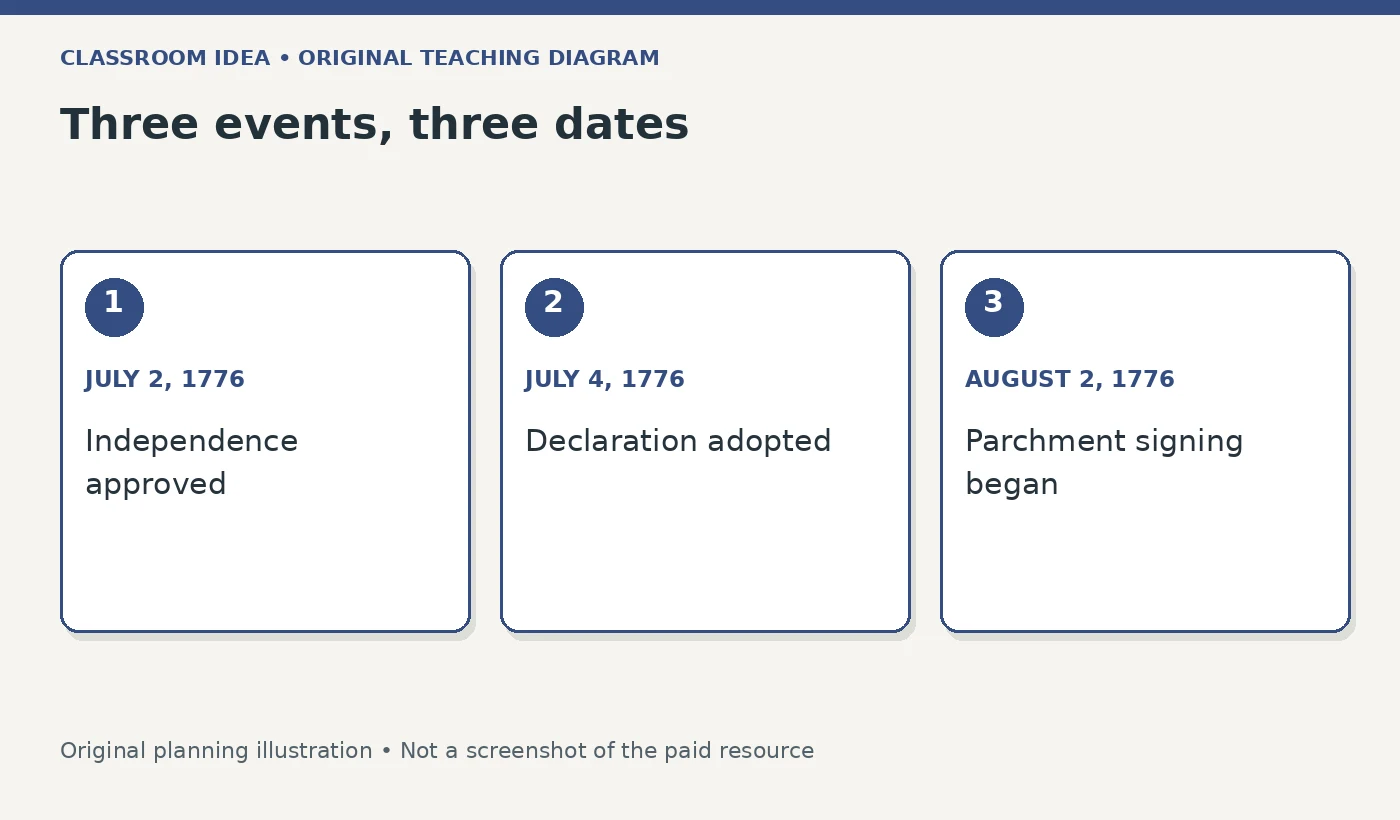
Begin with a short chronology: Congress approved independence on July 2, adopted the Declaration’s wording on July 4, 1776, and delegates began signing the engrossed parchment on August 2. The National Archives document history explains the drafting, revision, printing, and signing sequence. These are related events, not interchangeable names for a single meeting.
Ask students why that distinction matters when they view an image. A later engraving, a printed broadside, and the signed parchment may reproduce related words but have different production histories. Before analyzing the message, identify which version is being shown and where its transcription comes from.
Read for the job each passage performs
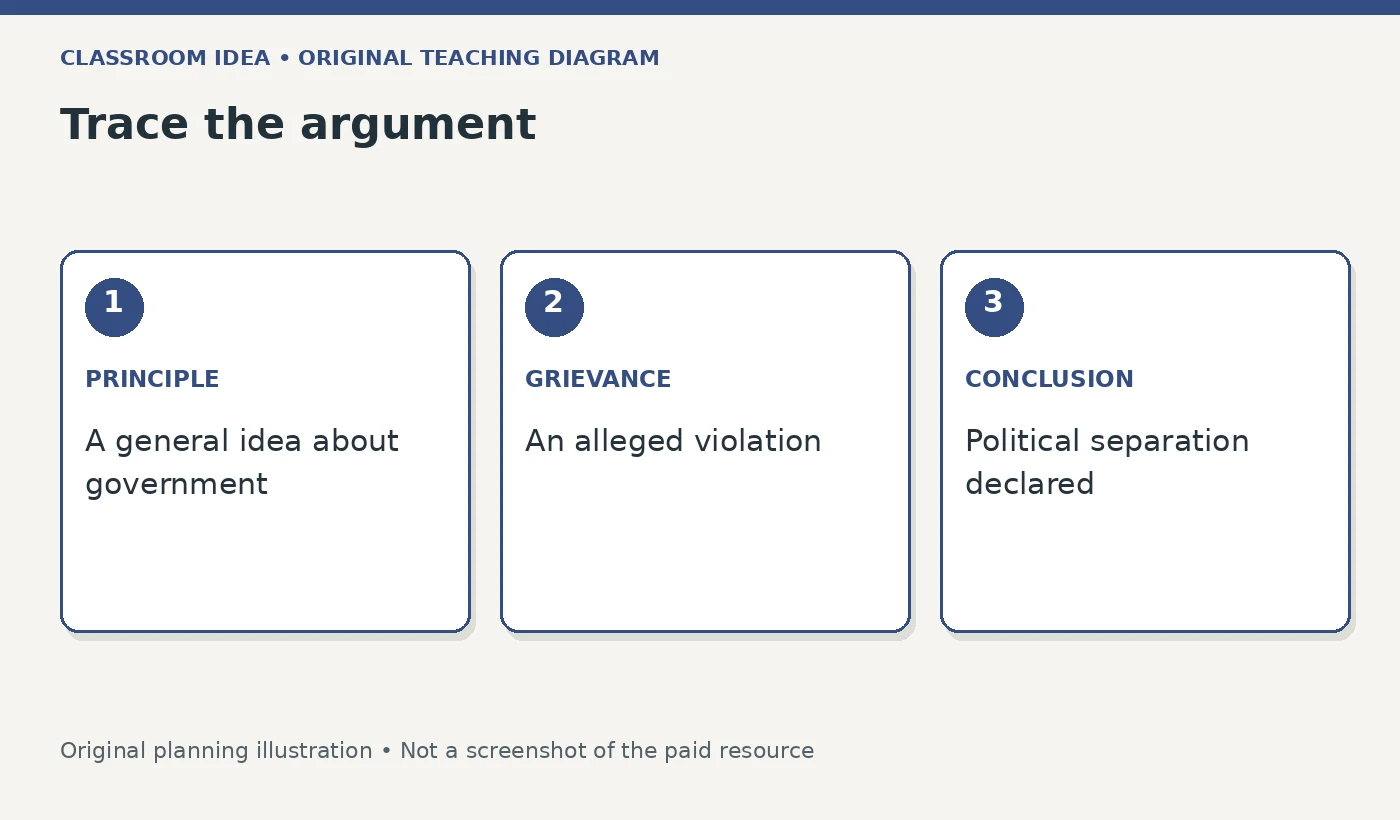
Give students three labels: principle, grievance, and conclusion. A principle states a general idea about legitimate government. A grievance identifies a wrong the authors allege. The conclusion states the political action or status being declared. These categories help readers trace the argument; they do not make the text a neutral report.
Use the National Archives transcription for the actual wording. Introduce only the vocabulary needed for the selected passages, such as consent, legislature, and grievance. Tell students when you offer a modern paraphrase. Do not put simplified language in quotation marks as though it came from 1776.
Model the link between a principle and a grievance
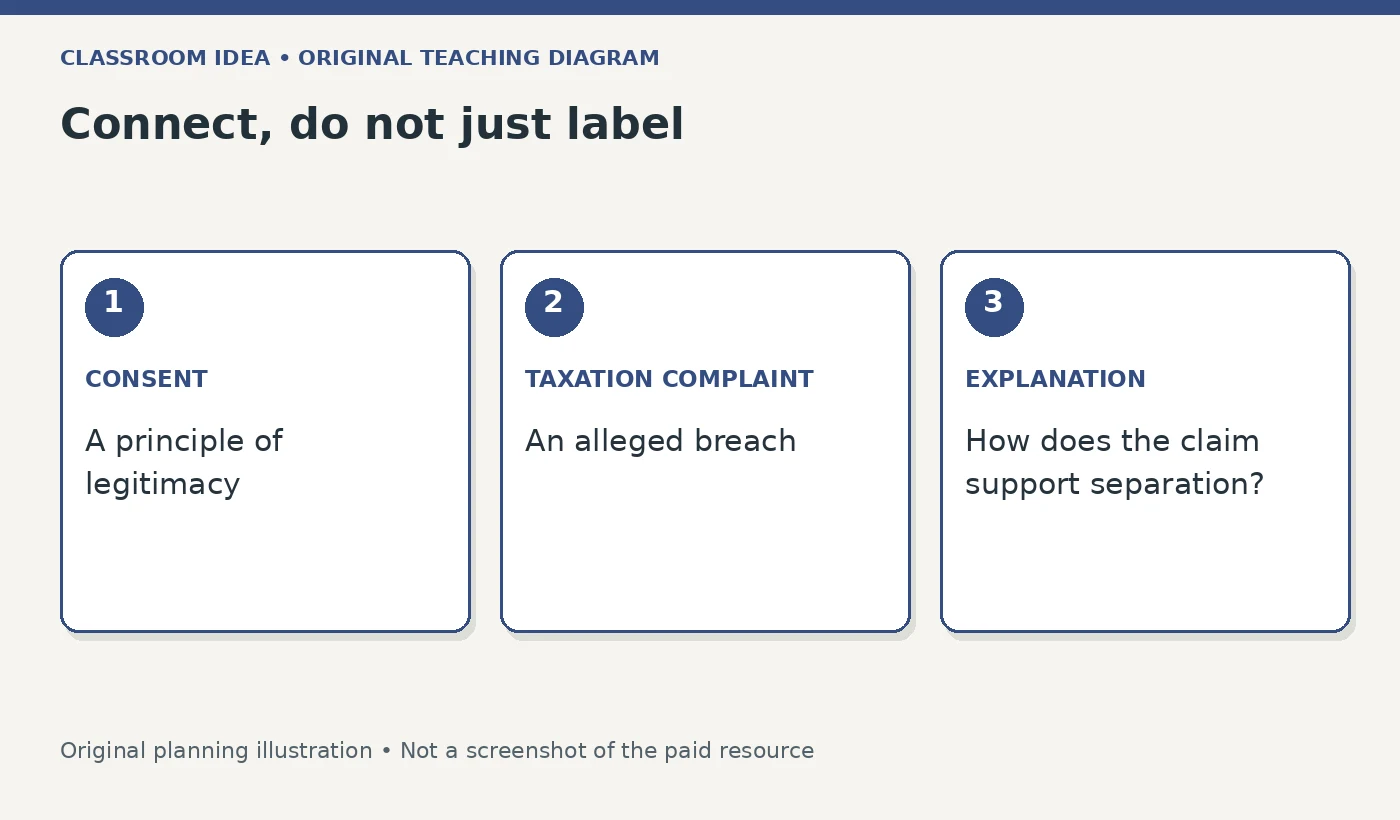
The phrase “consent of the governed” is a useful starting point. Pair it with the complaint “For imposing Taxes on us without our Consent.” Ask: what repeated idea connects these passages? Then ask the more demanding question: how does the complaint help the authors argue that the government has failed the principle?
A model explanation can be short: Congress presents consent as part of legitimate government and alleges that taxation has occurred without that consent; the grievance is offered as evidence of a breach. Notice the verbs presents and alleges. Students are explaining the document’s reasoning. To judge all the events behind that complaint, they would need additional British and colonial evidence.
A passage-mapping activity
Prepare three excerpt cards from the source: the consent principle, the taxation grievance, and the closing declaration of political separation. Retain source labels and enough surrounding text for meaning. Place them in mixed order, then ask pairs to arrange a plausible argument path and explain each connection. The cards are a teaching selection, not a replacement for the whole document.
After pairs explain their sequence, show where each passage appears in the original. Ask why a long list of grievances follows the principles rather than standing alone. Students should begin to see that the authors are trying to make a case to an audience, not merely listing events they disliked.
Give students a claim that needs repair
Offer this intentionally flawed classroom statement: “The Declaration is just a list of taxes.” Ask students to use two different parts of the document to revise it. A stronger response might explain that it combines a theory of government, complaints about abuses, and an announcement of independence. Require a specific connection rather than a longer list of labels.
Then try a different misconception: “Because the Declaration says something happened, we do not need another source.” Students should distinguish evidence of what Congress argued from evidence sufficient to reconstruct every disputed event. A persuasive source is valuable precisely because it reveals a position, purpose, and selected claims. Bias does not make it useless; it changes how we question it.
Show revision as part of authorship
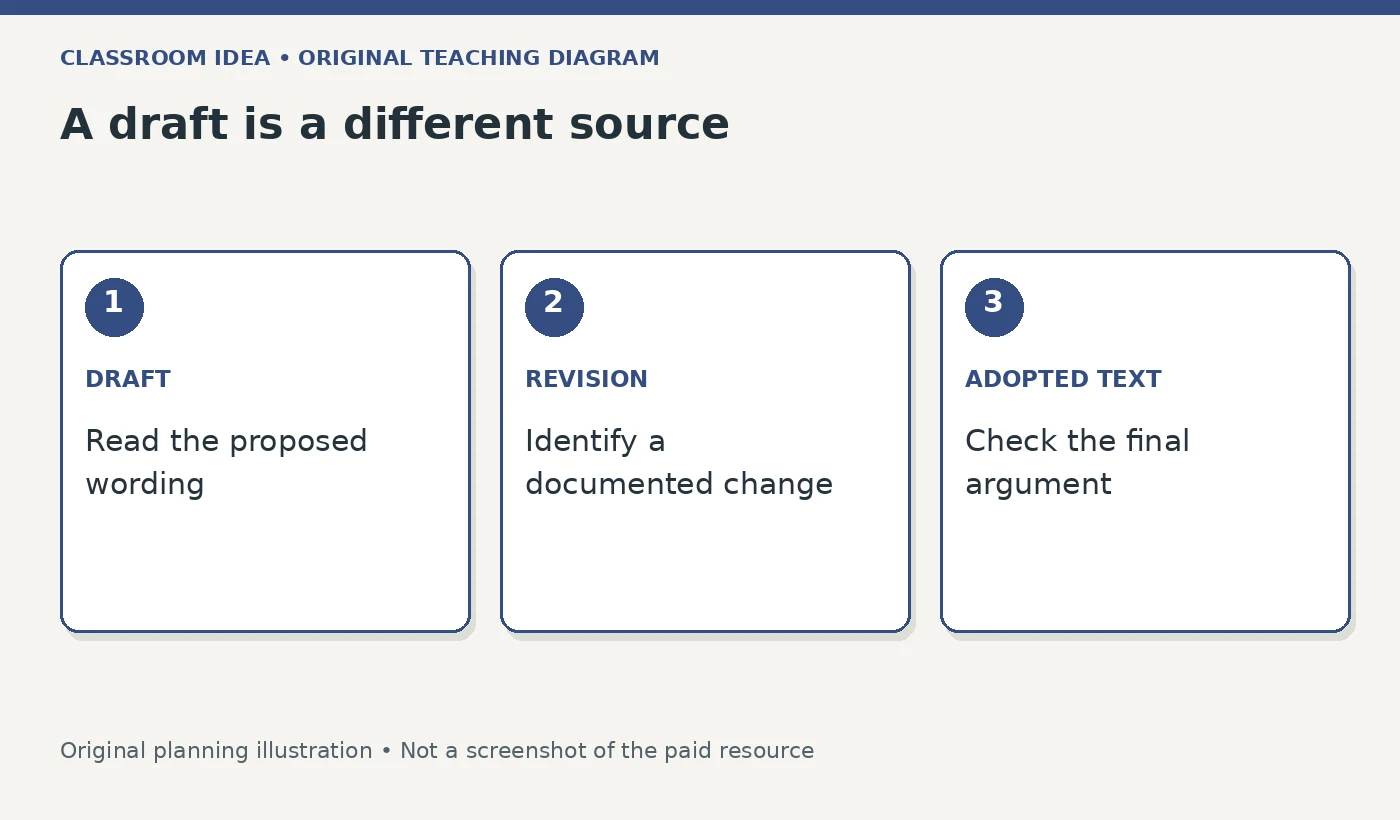
The Library of Congress exhibition on the Declaration presents Jefferson’s rough draft and explains its development toward the adopted text. A draft is a different source from the final document. Students can compare a small, well-transcribed change and ask what changed in the argument or emphasis, without inventing private conversations among the delegates.
Keep the attribution accurate: Jefferson was the principal drafter, and the committee and Congress revised the text. Avoid presenting the adopted document as a private essay written and published by one person. For a short lesson, this can be a closing source question rather than a second full activity.
Address the gap between a principle and practice
Do not let the word equality become an unsupported claim that everyone gained equal rights in 1776. Nor should students assume that identifying an exclusion makes the document historically irrelevant. Set a subsequent inquiry: who could exercise political power, who remained enslaved, and how did other people use or challenge the stated principles?
Answer those questions with additional sources appropriate to the class, not an improvised role-play in which children must defend oppression. The original text also contains dehumanizing language about Indigenous people. Prepare students for that bias, identify it explicitly, and choose an age-appropriate reading approach. Students need not repeat a slur aloud to examine how a source characterizes another group.
Check whether students can explain a connection
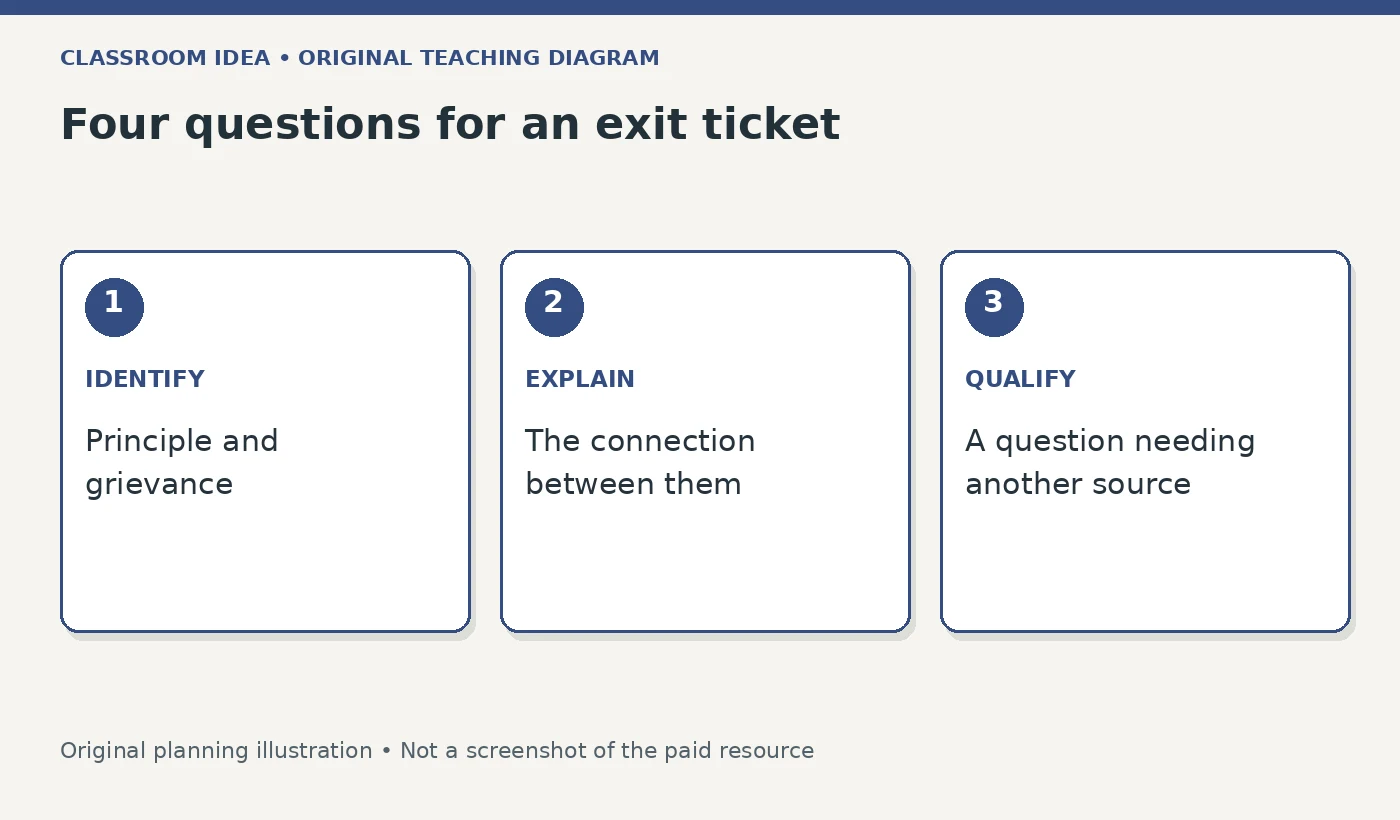
- Which passage in today’s selection gives a general principle?
- Which passage alleges a particular violation of that principle?
- How do the authors use that connection to support their conclusion?
- What question would require another source?
Possible answers and a simple success check
The consent passage provides the principle, and the taxation complaint alleges a violation. The authors use grievances within a broader argument for separation. A question about how different groups understood representation, or whether a specific allegation gives a complete account, needs further sources. Look for one accurate connection, one identified source limit, and a clear distinction between original wording and the student’s paraphrase. Do not score agreement with the authors as the learning goal.
Extend the inquiry selectively
The Declaration and Natural Rights lesson pack includes 30 teaching slides, printable practice, review questions, teacher guidance, and five source cases spanning the adopted text, a draft, a letter, a petition, and a later antislavery speech. Keep those dates separate when selecting an extension. The later speech is not a contemporary account of the drafting session.
For another source with a persuasive purpose, see the Boston Massacre engraving lesson. Students can compare how an image and a written declaration make claims, while grounding each in its own date, audience, and evidence.
